
Wolf oven repair covers the diagnostics and parts work that restore a professional-grade oven to accurate, safe operation. For Miami homeowners, that usually means a bake or broil element, an oven sensor out of tolerance, or control-board calibration drift.
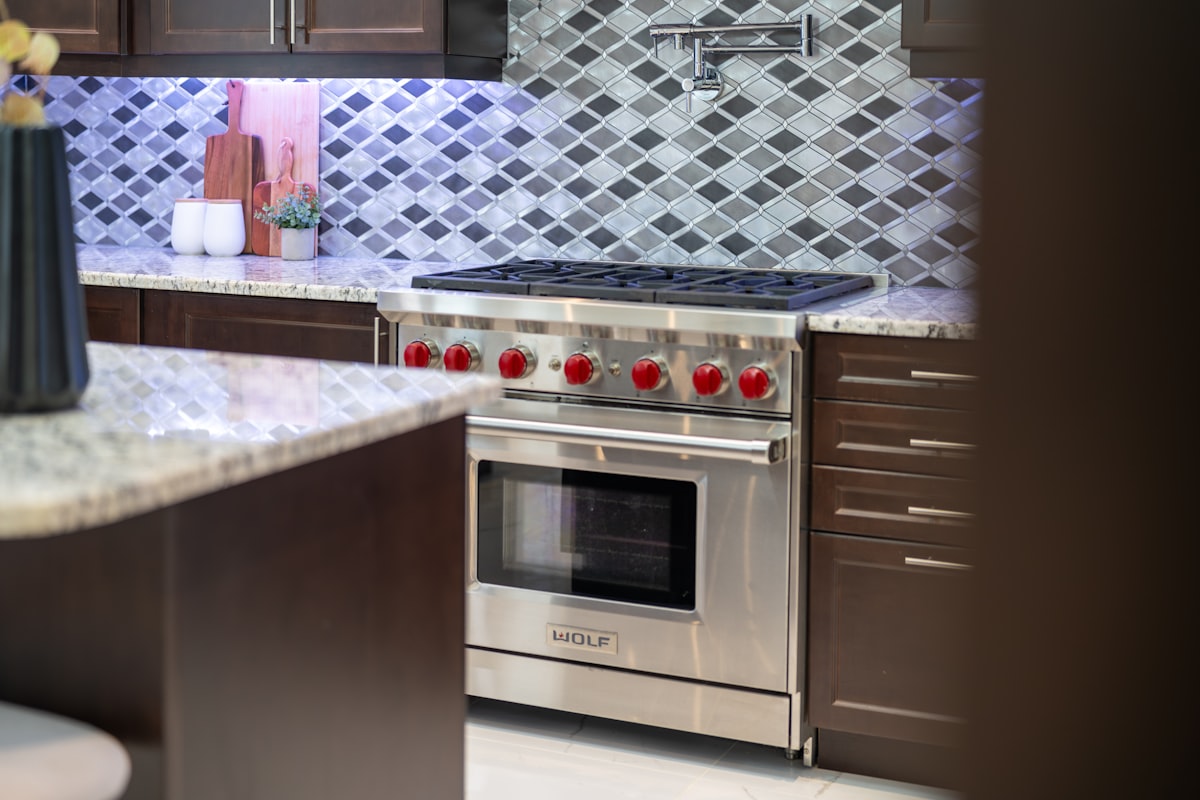
These are not standard appliances. Wolf builds dual-fuel ranges, M-Series and E-Series wall ovens, and steam ovens around proprietary ignition and control systems, which means the diagnostic logic differs from mainstream brands. This breakdown covers the faults that appear most often, what causes them, and how to judge repair against replacement.
Wolf Oven Repair: What Miami Homeowners Need to Know
Wolf oven repair addresses a specific failure rather than the whole appliance. A technician isolates the faulty component, verifies the electrical or gas circuit behind it, replaces the part, and recalibrates the oven before leaving.
Cooking equipment deserves that attention. The U.S. Fire Administration reports that cooking was the leading cause of home fires in 2024, which makes a malfunctioning oven a safety matter and not only an inconvenience.
What Causes a Wolf Oven to Stop Working?
Most complete failures trace to power supply, a tripped thermal fuse, a failed control board, or an ignition system fault on gas models. Each produces different symptoms, and each is diagnosable without guesswork.
Expert tip: note exactly what the oven does before you call. An oven that preheats then quits behaves differently from one that never lights at all. That single detail often tells a Miami technician which component to test first and shortens the visit.
Why Is My Wolf Oven Displaying an Error Code?
Error codes are the control board reporting a condition it cannot resolve. On Wolf dual-fuel ranges, F-series codes point toward control-board, sensor, or relay faults rather than a single universal cause.
Do not clear and ignore a repeating code. A code that returns after a power cycle indicates an active fault, and continuing to run the oven can stress adjacent components. Photograph the display and the model number before scheduling service.
Why Is Your Wolf Oven Not Heating Properly?
Heating problems usually come from one of four sources: a failed bake or broil element, an oven sensor reading outside tolerance, calibration drift in the control board, or a weak igniter on gas models.
Kitchen equipment failures are worth addressing early rather than living with. The U.S. Department of Energy finalized updated efficiency standards for residential cooking products, projected to lower household utility bills by $1.6 billion while improving appliance reliability and performance, which underscores how much a properly calibrated oven affects both cost and output.
Why Is My Wolf Oven Not Heating?
No heat at all points to a broken element, a failed igniter, or an interrupted circuit. Partial heat points to a sensor or calibration issue instead, since the oven is working but not reaching or holding the set point.
Run this quick check before you book service in Miami:
- Confirm the breaker has not tripped at the panel
- Verify the gas supply valve is fully open on gas models
- Check that the oven is not stuck in Sabbath or demo mode
- Note whether the display lights up and responds to input
- Listen for the igniter clicking or glowing on gas models
- Record any error code exactly as it appears
- Test both bake and broil separately to isolate the element
- Photograph the model and serial plate for the technician
Stop there. Anything past these checks involves live voltage or gas connections, and Wolf components are calibrated to tolerances that reward professional testing over trial and error.
Why Is My Wolf Oven Not Reaching the Correct Temperature?
Temperature drift usually means the oven sensor has moved out of tolerance or the control board needs recalibration. The oven still runs, so many owners live with it for months before calling.
Consider a hypothetical Coral Gables homeowner whose roasts kept finishing underdone. An oven thermometer showed a 40-degree gap between the setting and the actual cavity temperature. The sensor tested outside specification. One replacement and a calibration restored accurate cooking without touching anything else.
Common Wolf Oven Parts and Performance Issues
The parts that fail most are the bake and broil elements, oven sensors, igniters on gas models, convection fan motors, door hinges and seals, and control boards. Genuine Wolf parts matter for every one of them.
Miami adds its own stress. Heat, humidity, and salt air near the coast accelerate corrosion on electrical connections and hardware, which is why coastal kitchens often see component wear sooner than inland ones.
The OVEN Check
Run this four-point check before you decide what a Wolf oven actually needs:
- O for Observation: what the oven does, and at what point it fails
- V for Verification: breaker, gas valve, and mode settings confirmed
- E for Error data: the exact code, plus model and serial numbers
- N for Need: whether the fault is heating, ignition, control, or door
Four points, five minutes. Arriving at the call with all four answered gives the technician a head start and frequently turns a two-visit job into one.
Can a Wolf Wall Oven Be Repaired?
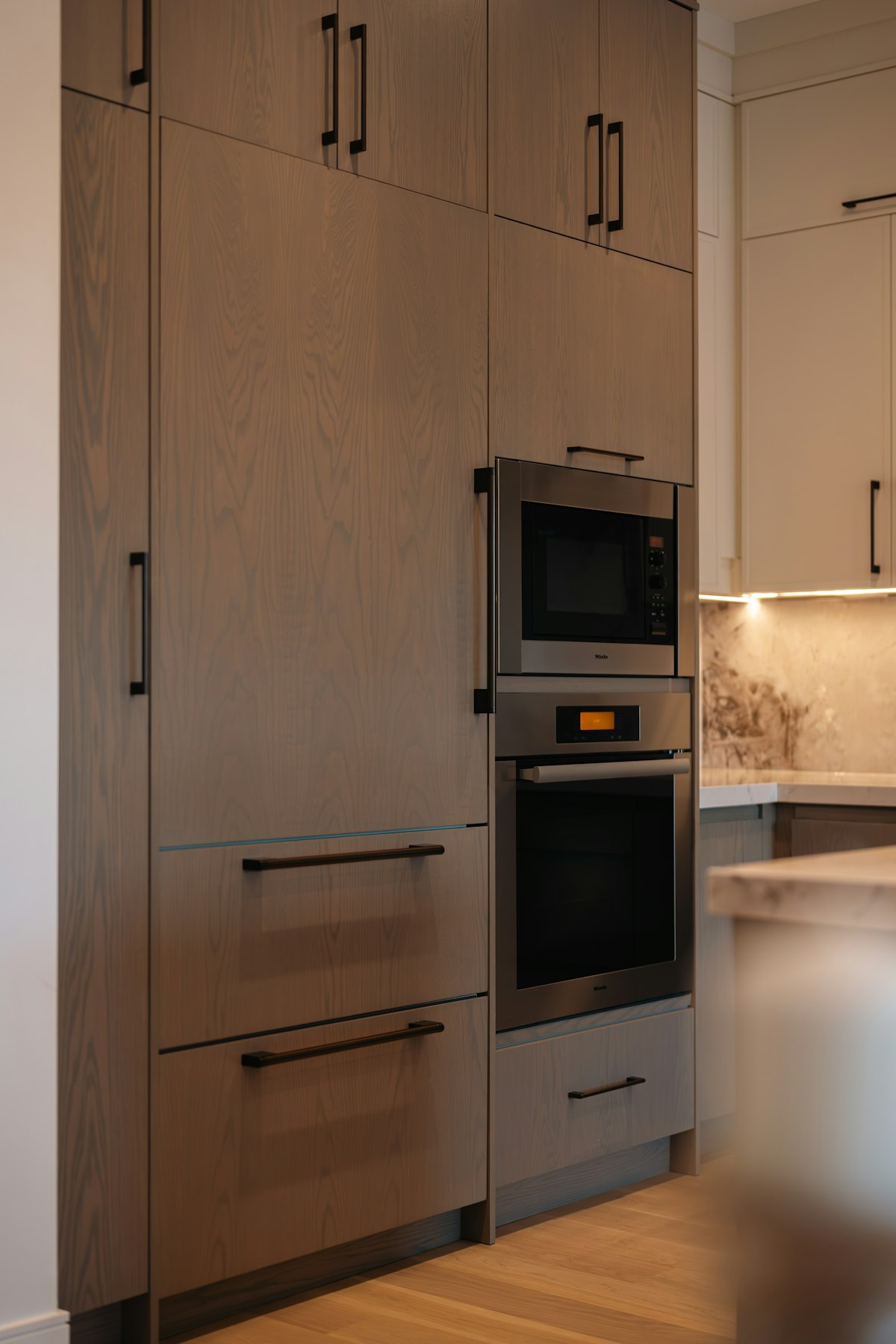
Yes. Wall ovens are built for component-level service, and elements, sensors, hinges, seals, fan motors, and control boards are all replaceable within the existing cabinet.
Built-in units reward repair over replacement. Swapping a Wolf wall oven often means cabinetry modification, electrical work, and matching adjacent appliances, which is why component repair remains the practical choice on a unit with remaining service life.
How to Choose a Wolf Oven Repair Service in Miami
Choose on brand specialization, genuine parts, written estimates, and warranty coverage. A technician who works on every brand rarely carries the Wolf-specific parts your model needs on the truck.
Skilled trades are in demand. The U.S. Bureau of Labor Statistics projects installation, maintenance, and repair occupations to grow faster than average from 2024 to 2034, with about 608,100 openings each year and a median wage of $58,230 in May 2024.
When Should You Call a Wolf Oven Technician?
Call immediately for any gas smell, visible sparking, a door that will not latch, or a repeating error code. Those conditions are safety issues, not maintenance items.
Call promptly for slower symptoms too: uneven baking, long preheats, a noisy convection fan, or a self-clean cycle that will not complete. Working with technicians who specialize in Wolf equipment means the diagnosis reflects how these ovens actually behave.
How Long Does Wolf Oven Repair Usually Take?
Most repairs finish in a single visit when the technician carries the part. Element swaps, sensor replacements, and igniter work are straightforward once the fault is confirmed.
Timelines extend when a control board or a model-specific component must be ordered. Services covering the full Wolf cooking lineup stock the parts their local models need most, which is what keeps Miami calls to one visit.
Conclusion
Wolf oven repair in Miami comes down to accurate diagnosis and the right part. Note exactly how the oven fails, record any error code, confirm the basics at the breaker and gas valve, then call a technician who works on Wolf equipment daily rather than occasionally. Early service keeps a sensor replacement from becoming a control-board job.
Sub-Zero Repair Services has provided premium-only appliance repair across South Florida since 1994, servicing Sub-Zero, Wolf, Cove, Viking, Thermador, Bosch, and Miele with factory-trained technicians, genuine OEM parts on every truck, and no surcharges for nights, weekends, or holidays. Same-day service reaches Miami and Miami-Dade County 24 hours a day. Call (800) 651-4528 to request a service call.
Frequently Asked Questions
Is Wolf oven repair worth it compared with replacement?
Usually yes. Wolf ovens are built for component-level service, and built-in installation makes replacement expensive once cabinetry, electrical work, and matching adjacent appliances are factored in. Repair almost always costs a fraction of that.
How can regular maintenance help prevent Wolf oven problems?
Routine service catches drifting sensors, worn door seals, and weakening igniters before they cause a failure. Keeping the cavity clean, avoiding harsh cleaners on the control panel, and checking the door seal annually extends component life considerably.
Can I replace a Wolf oven element myself?
Element replacement involves live voltage and, on gas models, fuel connections. Wolf components are also calibrated to specific tolerances. Professional service protects both the warranty on genuine parts and everyone in the household.
Why does my Wolf oven take so long to preheat?
Slow preheat commonly points to a weakening bake element, a degraded igniter on gas models, or a sensor reading high. A worn door seal that lets heat escape produces the same symptom and is worth checking first.
Need Professional Help?
Our certified technicians are available 24/7 for same-day service.
About Sub-Zero Repair Services
Sub-Zero Repair Services has provided Sub-Zero appliance repair in South Florida since 1994. Our factory-trained technicians offer 24/7 same-day service across 82 cities in 7 counties, using only genuine manufacturer parts with a full warranty on all repairs.